
The Evolution of Beat 'em Ups: From Arcade Cabinets to Digital Storefronts
Beat 'em up is one of the oldest genres in gaming and has gone through many changes since the early 80s when it dominated the arcade scene. We explore how the genre came to be, how it evolved and the current challenges it faces in the current gaming environment.

Beat 'em ups have always occupied a peculiar place in the gaming industry. They were one of the defining arcade genres of the late 1980s and early 1990s, almost disappeared during the transition to 3D, and today remain a relatively niche genre compared to RPGs, shooters, or action-adventure games.
Despite that, the past few years have shown that there is still a market for them. Streets of Rage 4, TMNT: Shredder's Revenge, Sifu and more recently Absolum have all demonstrated that a beat 'em up can still become a commercial success in today's market.
Yet, for every success story, there are many more games that receive positive reviews but fail to reach a wider audience. This raises a simple question: what makes a modern beat 'em up successful?
In our opinion, simply making a "good" beat 'em up is no longer enough. Every successful title of the last few years has combined strong execution of the genre's fundamentals with a clear twist that immediately differentiates it from the competition. Whether through combat systems, progression mechanics, presentation, or a completely different gameplay structure, the best modern brawlers all offer players a compelling reason to choose them over dozens of similar games.
In this article, we'll briefly look back at the history of the genre, analyze the design principles that define a great beat 'em up, and discuss why innovation has become just as important as solid game design.
If you want to jump to a specific chapter, you can use the links below.
The history of beat' em ups
The first beat' em up
Beat' em ups trace their roots back to the early days of video games. Kung-Fu Master (1984), developed by Irem for arcades in Japan, is generally considered the first beat' em up in history. It already featured most of the elements that would come to define the genre: progressing horizontally through stages while fighting waves of enemies, a strong focus on melee combat, simple combo strings, and bosses waiting at the end of each level.
The late 1980s and early 1990s were the golden age of arcades, and beat' em ups thrived during this period. Between 1987 and 1991, many of the genre's defining franchises were born, particularly in Japan, including Double Dragon (1987) by Technos, Final Fight (1989) by Capcom, and Streets of Rage (1991) by SEGA. Although they shared the same core formula, each series carved out its own identity by introducing new mechanics, such as two-player co-op, weapons, and playable characters with unique stats and special attacks.
We think that Cadillacs and Dinosaurs (1993) by Capcom deserves a special mention. The game unique selling point was dinosaurs occasionally appear during stages and attacking both players and enemies alike, creating some of the genre's most memorable moments.
The evolution of the genre
The genre continued to evolve throughout the 1990s. Developers experimented with RPG mechanics, allowing characters to gain experience and become stronger (Guardian Heroes, 1996), deeper combo systems (Alien vs. Predator, 1997), and larger playable rosters (Battle Circuit, 1997). Unfortunately, these innovations were not enough to keep pace with changing player preferences. During the second half of the decade, the genre entered a rapid decline, driven by several factors: the decline of the arcade business, the industry's shift toward 3D games, and the growing popularity of fighting games.
Developers naturally tried to embrace the move to 3D as an opportunity to reinvent the genre, but it is fair to say that none of these attempts truly succeeded, even if a few games achieved critical acclaim. We won't spend too much time on them here, but if you're interested, Die Hard Arcade (1996) and SpikeOut (1998) by SEGA, The Bouncer (2000) by DreamFactory, and The Warriors (2005) by Rockstar Games are all worth checking out.

After that, the genre virtually disappeared for more than a decade.
As developers and players embraced fully 3D experiences, many naturally gravitated toward adjacent genres, particularly fighting games and character action games such as Devil May Cry and Ninja Gaiden, leaving traditional beat' em ups behind.
Fast forward to the late 2000s, however, and things started to change once again. Indie studios were gaining momentum, while Steam and digital distribution dramatically lowered the barriers to releasing games. A handful of developers proved there is still an audience eager to beat up waves of enemies with friends.
Castle Crashers (2008) is probably the clearest example of this revival, bringing brawlers back to mainstream audiences.
Its enormous success, combined with these new market conditions, encouraged many smaller studios to invest in the genre. As a result, the following years saw more beat' em ups released than ever before, both through the revival of classic IPs and the creation of entirely new ones.
At the same time, this increase in production did not translate into widespread commercial success. While there are notable exceptions - which we will discuss shortly - the vast majority of these releases mainly appealed to the old brawler audience, which had simply been waiting for new games to arrive.
Many projects clearly underperformed or failed commercially (Double Dragon Revive being one of the most recent examples). Even games such as River City Girls, Scott Pilgrim vs. The World: The Game, and Marvel Cosmic Invasion, despite receiving strong critical reviews (79, 79, and 81 on Metacritic respectively), didn’t become major commercial successes and remained confined to the brawler niche.

In parallel, however, a handful of games broke through. Streets of Rage 4 (2020) surpassed 2.5 million copies sold, Teenage Mutant Ninja Turtles: Shredder's Revenge and Sifu (both 2022) exceeded 3 million and 4 million copies respectively, while the recent Absolum reached 500k copies within its first three months.
The evidence is clear: it is still possible to launch a highly successful brawler in 2026. The problem is that very few games actually manage to do it.
So what separates today's successful brawlers from the rest?
Before trying to answer that question, let's first look at the core design elements that, in our opinion, define the genre.
What makes a beat' em up a good one?
Let's deep dive now into the game design of a beat 'em up.
We think there are some elements that make beat 'em ups unique and distinguishable:
(Usually) 2D visuals with horizontal and vertical movement
Waves of varied enemies
Melee combat
The gameplay loop is usually something like:
Kill enemies on the current screen
Kill the boss at the end of the stage
On the surface, the genre looks really simple. But then, what makes a beat 'em up a good one?
We think a lot of it comes down to having perfect pacing in terms of challenge and skill mastery, which keeps players in the flow state.

When we talk about design and pacing in beat 'em ups, we should focus on encounter pacing, enemy design, and player-focused gameplay, which are the pillars of the genre.
Encounter pacing
If we talk about encounter pacing/design in a beat 'em up, we are talking about stage and screen pacing. To be clear, when we talk about a stage, we mean a level that goes from the start until the boss fight. A screen, on the other hand, is a momentary fixed shot, where players are forced to defeat the enemies on the screen to proceed.
So, a stage is composed of a certain number of screens.

Macro pacing refers to the pacing of the whole stage: we want players to be engaged, we want the difficulty curve to slowly increase until the climax of the boss fight, and we want to eventually introduce and teach new mechanics. All of this should happen without making players feel frustrated and/or bored due to the length of the stage.

Micro pacing refers to the pacing of a single screen, so we need to answer the following questions: how many enemies, and of which archetype, should we spawn? How often should they spawn? Is it fun to fight this enemy archetype combined with this other archetype? Does it take too long to complete this screen? Is the gameplay and the situation still readable for players, or is it becoming too chaotic?

Especially the last question, in our opinion, is a difficult one to balance: chaos is always fun, but if it becomes an unwanted deficit for the player, it can become frustrating.

Balancing encounters, then, can heavily affect the challenge level of the game, pushing players toward frustration or boredom.
Enemy design
Enemy behavior variation
You know a beat 'em up is a good one when different enemies require you to approach them in different ways, instead of doing the expected and boring "go right and press A" technique.
Let's take Absolum, for example, and use even a single archetype with three variations to explain what we're talking about.
One of the enemy races is Goblins. They come in a lot of variations, but we'll take three of them:
Goblin raider (Basic)
Goblin grenadier (Ranged)
Goblin warrior (Tank)

This is one of the most basic NPCs. They flank the player, but they are really easy to deal with since players can simply go toward them and attack, without having to think too much.

This goblin is easier to defeat compared to the raider, since it has no close-range attack. The problem with them, though, is that they throw grenades from a distance, which cause really high damage. Since they are usually in the back of the fight, they force players to either deal with other enemies first or go through them, since players will most likely want to kill the grenadiers first.

This goblin, instead, represents a tankier version of the goblins. They can't be attacked from the front, so players will need to either grab them or go behind them to attack. This causes players to have to change their strategy on the battlefield, since they now have more constraints on their positioning.
This is a quick example of how enemy variation in terms of behavior and capabilities makes gameplay feel deep and interesting, asking players to make choices.
Popcorn vs HP sponges
Another very important aspect regarding enemy design is time-to-kill balancing. This applies to a lot of games, but in beat 'em up games it is even more relevant.
At a high level, there are two main types of enemies:
Popcorn enemies
Short time-to-kill
Given to players mainly as a fun element to kill
Easy to deal with
HP sponges
High time-to-kill
Might become frustrating to players if the feeling they get when fighting them is that they are tedious to kill due to high health
Difficult to deal with
This goes hand-in-hand with the flow state discussed above: having levels filled with popcorn enemies pushes players toward the boredom zone, while having levels filled with HP sponges pushes players toward the frustration zone. This is essentially why those two archetypes exist and designers should balance them efficiently to keep the player in the flow state.

Gameplay
Until now, we've talked about the enemies, which are a fundamental part of the game, but now let's focus on players' gameplay and how that impacts our difficulty curve.
Despite having a lot of gameplay elements that players need to master in this genre, we think the following ones are the most important:
Combos: this mechanic allows designers to keep players in the flow zone. While the game becomes increasingly difficult through new enemies (more HP, ranged enemies, enemies that can block attacks, etc.), players must get better at combo chaining and dealing damage to keep progressing.
Vertical positioning: players can move up and down in the level to avoid being surrounded by enemies and to avoid attacks. This mechanic adds depth to the gameplay if we compare it to older beat 'em ups where players could only move horizontally. In this way, the player has more interesting decisions to make: should I keep attacking? Should I move to the side?
Defensive techniques: modern beat 'em ups started to add defensive techniques. This also adds depth to the gameplay: now players have more options rather than just moving away from an attack or keeping pressure on their targets.
Some examples of unique gameplay mechanics added in recent beat 'em ups are:
Streets of Rage 4: the defensive special grants players invincibility frames but costs players (temporary) health, that they can recover by attacking opponents.
Absolum: players can dodge (both horizontally and vertically) and can block incoming enemy attacks with a mechanic very similar to parry in modern 3D action games.
Sifu: the foundation of the combat is based on parrying enemy attacks, much more like a fighting game more than a brawler.

The mechanics above influence the difficulty curve: making them too difficult to master or difficult to understand can easily push players toward the frustration zone. Making them too easy to master pushes players toward the boredom zone. So again, it is the job of the designer to find the right spot for all of these mechanics to work together.
So, what makes a beat 'em up good?
Looking at all these elements together, we can see that a good beat 'em up is not simply about having fun enemies to punch or a large number of combat mechanics. It is about how encounters, enemies, and player abilities work together to create a constantly evolving challenge.
At the core of the genre is a simple relationship:
Enemies create problems → players use their abilities to solve them → encounters gradually introduce more complex problems → players become better at solving them.
This is what allows a beat 'em up to maintain its flow.
Encounter design controls when and how much pressure is applied. Enemy design determines what kind of problems the player has to solve. Player mechanics determine how many tools the player has available to solve those problems.
The best games constantly move these three elements together.
A new enemy might force the player to change their positioning. A ranged enemy might force them to prioritize targets. A tank might force them to get behind an enemy rather than simply attacking from the front. As these enemies are combined, the player is asked to make increasingly complex decisions. At the same time, their growing mastery of combos, movement, dodges, blocks, and other defensive mechanics gives them more ways to deal with these situations.
This also explains why simply adding more enemies, more health, or more damage does not necessarily make a beat 'em up better or more difficult in an interesting way.
Difficulty should come from increasing the complexity of the problems players have to solve, not simply increasing the amount of time they have to spend solving them.
Ultimately, good beat 'em up design is about finding the right balance between challenge and mastery.
Conclusions
Now that we have discussed the design principles of a good beat 'em up, we can revisit the games mentioned throughout this article and ask a simple question: what do successful modern brawlers have in common, and why did others fail to reach the same level of success?
Looking at the most successful releases of the last few years, some common patterns begin to emerge.
First, all of these games are generally praised for the quality of their core design. Reviews consistently highlight their enemy design, encounter pacing, and gameplay, confirming many of the principles discussed in the previous chapter.
At the same time, each successful game also offers players a clear reason to choose it over other beat 'em ups.
Castle Crashers and Absolum both introduce a genre twist. Castle Crashers combines the beat 'em up formula with RPG progression, while Absolum reimagines it as a roguelike.
Streets of Rage 4 builds upon an already established beat 'em up franchise while modernizing the gameplay with interesting risk-reward mechanics (heavy attacks consume HP if the Special Attack (Rage) bar is empty).
TMNT: Shredder's Revenge shows how a recognizable IP combined with an exceptionally polished beat 'em up can achieve major commercial success. Nostalgia also plays an important role here: Teenage Mutant Ninja Turtles by Konami was released in 1989 and came to be one of the most successful game of that generation. So, leveraging the same IP today had a very strong effect on the audience.
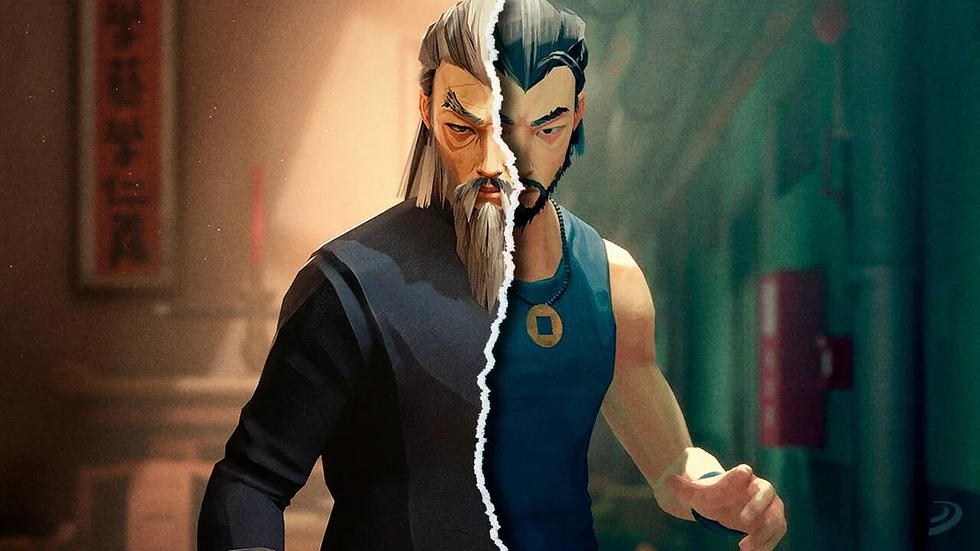
Sifu is something of an outlier. While fundamentally a beat 'em up, it introduces major innovations through its aging mechanic and fully 3D combat. More importantly, it positioned itself as something broader than a traditional beat 'em up, becoming closer to a 3D combat game. In hindsight, this proved to be the right move.
The picture changes when looking at recent games that did not achieve the same commercial success.

We want to underline that the game discussed below are very good games in terms of design and artistic value (as we mention in the opening section, their Metacritic scores are in the high 70s-low 80s), but still they didn't manage to expand beyond the average brawler audience like the titles mentioned above have done. Let's look at some examples:
River City Girls was widely praised for its artistic direction, but many players criticized its execution. Grinding, enemies that feel like HP sponges, and enemies that interrupt or block combos all directly relate to the design principles discussed earlier.
Scott Pilgrim vs. the World received very similar criticism. Reviews frequently mention excessive difficulty, enemy spawning, and stun locking, once again pointing toward encounter and enemy design.
Double Dragon Revive was criticized for many of the same reasons: HP sponge enemies, overly long screens instead of well-paced stages, and sudden difficulty spikes. As one review summarized, the game "failed in the task of updating the gameplay to modern standards, drowning in goofy mechanics, unoriginality, and boredom."
Marvel Cosmic Invasion is a more interesting case. Unlike the previous examples, its gameplay has generally been praised, which is not surprising considering it was developed by the same team behind TMNT: Shredder's Revenge. Its lower commercial performance is therefore harder to explain. We think there might have been two different reasons for this, both related to the Marvel IP. On one hand, Marvel became mainstream largely through the Marvel Cinematic Universe in the last 20 years, whereas TMNT was already an iconic franchise during the arcade era, when beat 'em ups were at their peak. As a result, the audience for a TMNT beat 'em up is arguably more familiar with - and nostalgic for - the genre than the broader Marvel audience, resulting in a lower-than-expected impact on the sales of the game. Moreover, a lot of Marvel branded games have been released in recent years, adding to a sort of “Marvel fatigue”, pretty much like what we’ve been seeing in the movie industry.
Taken individually, these examples are interesting. Taken together, however, they reveal a consistent pattern.
Every successful modern beat 'em up first succeeds at the fundamentals. Strong encounter pacing, well-designed enemies, satisfying combat, and a carefully balanced difficulty curve are prerequisites rather than differentiators. In other words, good design is the price of entry. Once that baseline is achieved, successful games almost always rely on at least one additional strength.
One approach is innovation, giving players something they cannot already find elsewhere, whether through RPG progression, roguelike structure, new combat mechanics, or even repositioning the game within a neighboring genre.
The other is IP, leveraging an established franchise that already resonates with players, especially when combined with nostalgia.
This leads us to our final hypothesis.
A successful modern beat 'em up needs strong design, but strong design alone is rarely enough. To stand out in today's market, it also needs either a recognizable IP or a meaningful innovation that clearly differentiates it from the competition.

The examples discussed throughout this article support this idea. Games that lack solid design tend to struggle regardless of their presentation or license, while games that combine excellent design with either a powerful IP or a compelling twist are consistently the ones that break out commercially.
One important difference between today's market and the arcade era is how players discover games. During the arcade years, players often chose from the few cabinets available in front of them. Today, players browse digital storefronts containing thousands of games across every genre. Before players can appreciate a game's combat, pacing, or enemy design, they first need a reason to click on it. A recognizable IP or a clear innovation can provide that initial appeal, while strong design determines whether the game delivers on that promise.


Comments